Third hysteroscopy in 12 months: Asherman’s syndrome, IVF and trying for baby #2
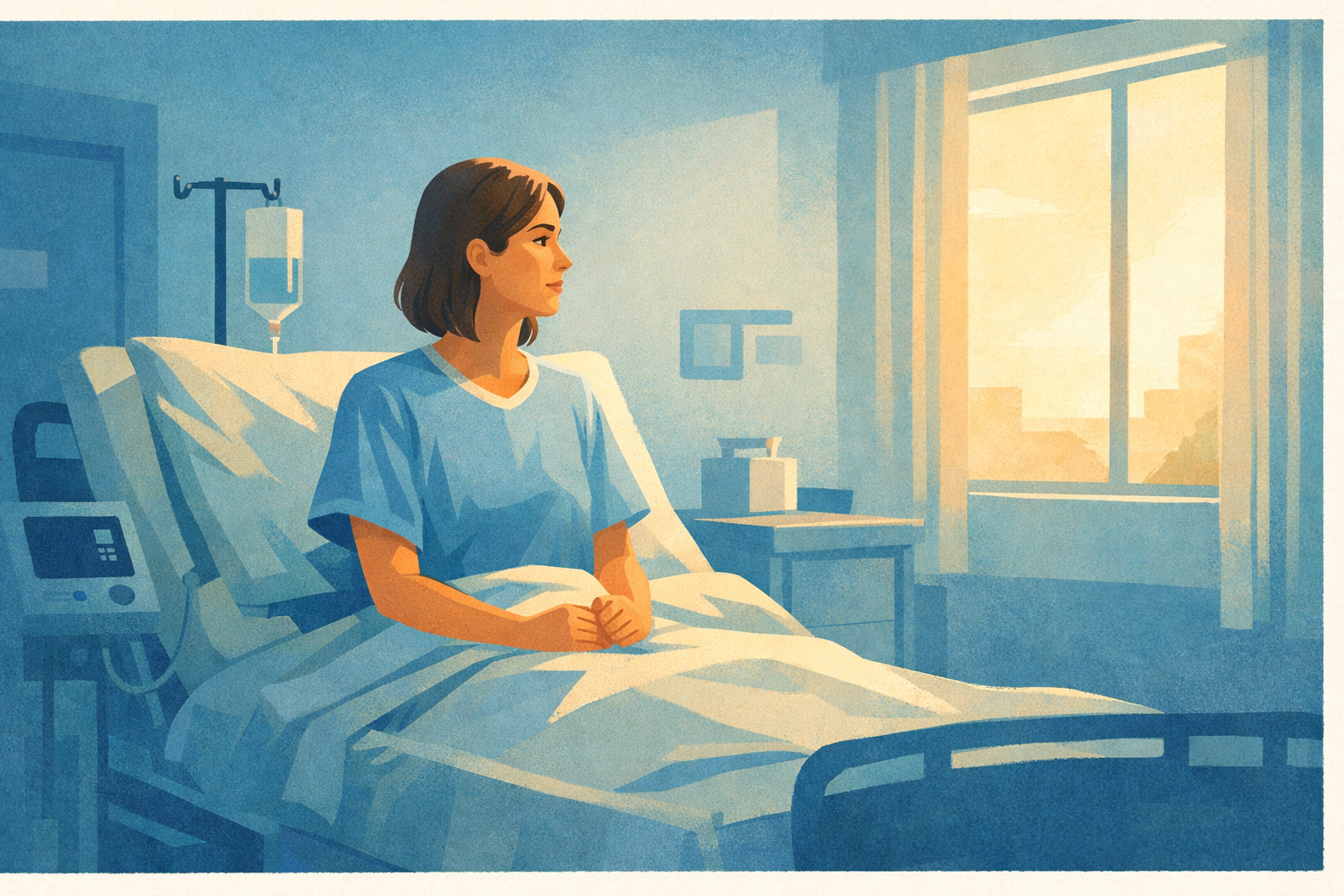
I hear it's the deepest sleep you can have, the corner of the Asherman's Professor's eyes smiled. It was the type of smile that revealed something deeper behind the comment.
It had been an early morning, up at the crack of dawn. My usual get-ready routine was replaced with preparing the blank slate for surgery. Washing my hair, scrubbing clean. No perfumes, no scents, no make-up necessary.
I'd ordered an Uber, driven by a rather disgruntled driver who was reeling over the NSW Premier's suggestion of a lockdown to counter the fuel crisis caused by the war in the Middle East.
Bored with the grind – work, gym, work, gym – and wishing for an escape to Bali.
Fearful over a quiet week preceding Easter, and what that would mean for his fully paid-off property and another that only has a couple hundred thousand dollars left to pay.
Mate, you're doing better than most. You could retire. After reassuring him that whether he chose Sydney or Bali, he’d be fine, I’m sure.
I made my way through the Prince of Wales Private Hospital, this time taking the scenic route signposted by laminated signs that were thoughtfully placed – so much so, you knew either a boomer woman or a gay millennial had made them.
I knew the routine. Seriously hydrate the evening before. Fast after midnight. Sip water to make it easier for the anaesthetist to find your veins. I checked in, changed into my glamorous backless gown, and put my things into a blue plastic garbage bag. Perhaps this is because it's easier to throw them away if things don't go to plan.
This is my third hysteroscopy to treat Asherman’s syndrome in 12 months. The first in March 2025. A year on, and this is the sixth time I've engaged the services of an anaesthetist, if you count the three rounds of IVF egg collections too. If I had known it would be this difficult to fall pregnant with baby #2, I would have thought twice about it.
The nurse, reaming after a botched hair appointment yesterday and an optometrist appointment the week before, was also in a state much like the Uber driver. I let her vent to release the pressure before offering her some kind words to alleviate her fears as well. All while lying in the hospital bed, about to undergo surgery. An odd choice for a medical professional, but triggers leave us with very few choices in the moment.
The hysteroscopy is a procedure where a thin camera is inserted into the uterus so the surgeon can see the uterine cavity. In my case, the goal is to remove scar tissue caused by Asherman’s syndrome and “clear the cavity” so the endometrium can regrow thick and healthy again – hoping to restore a uterus an embryo might choose to snuggle into.
I admire modern medicine, I really do, but I wonder whether going down this path was a good idea. Stage 3 Asherman's syndrome means the damage to the uterus is one stage off medical infertility.
The Professor came into the anesthetist bay, like he usually does, his presence felt like a calm, wise confidence. He reached for and held my hand, giving it a comforting squeeze before getting almost every memory of my case wrong. It turns out I had done an excellent job scrubbing the canvas clean that he perhaps didn't recognise me.
The anaesthetist, the one the nurse had grumbled about earlier, is my favourite anaesthetist. He can insert a cannula and give you the meds so quickly, you don't even realise he has done it. He reminds me of a quick-draw cowboy, except his hands move with elegance and precision. You'll start to feel relaxed.
The next thing I know, I'm waking up to a tray of ham, cheese and tomato sandwiches, tea and bikkies, and an apple juice in recovery. My throat is sore from, I suspect, the breathing tube – my body holding it as a memory because it was indeed a deep sleep.
The Professor told me he has never had a general anaesthetic in his life. A long, trailblazing career in women’s medicine, and he’s never been on this side of the curtain.
The procedure went well. Some scarring had returned. A 40% chance of falling pregnant.
Those odds are not great. But they are not zero.
Next cycle, we try again. The second last embryo.
Fireside Q&A
What is Asherman’s syndrome?
Asherman’s syndrome is a condition where scar tissue forms inside the uterus, often after surgery, which can make it difficult to fall pregnant or carry a pregnancy.
What is a hysteroscopy?
A hysteroscopy is a procedure where a small camera is inserted into the uterus so doctors can see and remove scar tissue or other abnormalities.
How many hysteroscopies can you have for Asherman’s syndrome?
Some women require multiple hysteroscopies to remove scar tissue and restore the uterine cavity, depending on how severe the scarring is and whether it returns.
Can you get pregnant after Asherman’s syndrome?
Yes. Success depends on the severity of the scarring and how well the uterine lining recovers after surgery, but pregnancy is still possible for many women after treatment.
Related Articles