
Flying with a baby (aka: You’re doing better than you think)
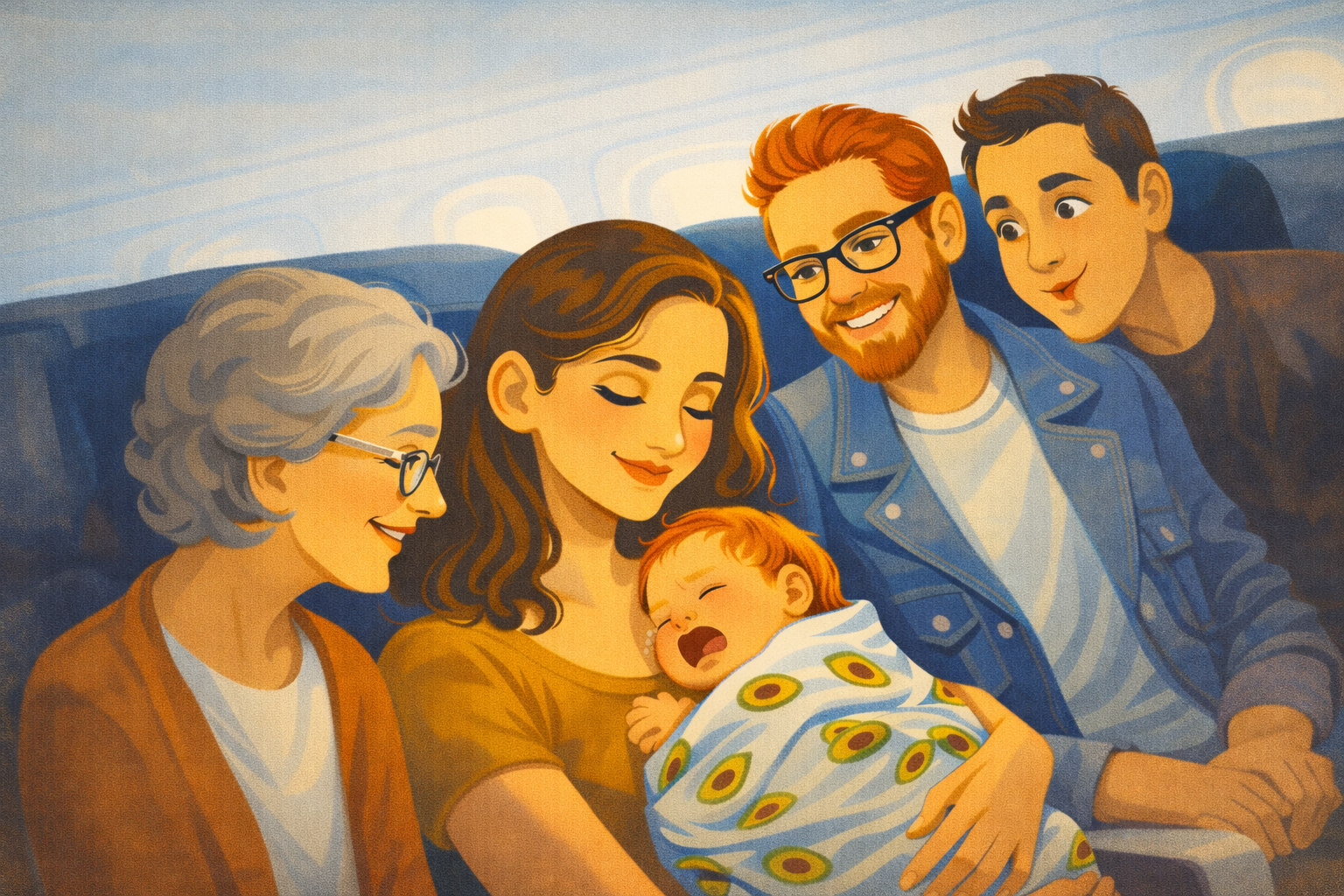
Recently, I was on a flight with my now two-year-old, and across the aisle sat a beautiful mum with a very fresh, brand-new baby.
The baby? Crying.
That’s what they do.
The mum? Visibly anxious, bouncing her baby, I suspect worried about the comfort of her baby and fellow passengers.
This is a tough place to be. I really felt for her. I remember being a first-time mum, flying with Lark at 2 months old.
So many thoughts raced through my head:
What do I do when she cries?
How do I stop my baby's little ears from hurting?
How do I make the flight comfortable for other passengers?
How on earth am I going to get through this flight with the least amount of pain possible – for everyone?
Since then, I’ve travelled with Lark on over 50 flights. Mostly domestic, but also international – to Japan when she was 8 months old and Scotland at 19 months.
Over time, I’ve learnt from trial-and-error on how to make her, other passengers, and myself more comfortable during flights – and I thought it might be helpful to share what I’ve learnt with you too. Because you can absolutely still travel with a baby!
1. Babies will cry – and that’s okay
The first thing we need to normalise is that babies will cry. All babies are different, but the one thing they have in common is crying – it’s how they communicate.
I know it’s hard. You want to fix it immediately. You want to soothe them. And yes, absolutely do what you can — but don’t be hard on yourself, Mama.
It is completely okay for babies to cry on planes. It’s not a failure on your part.
2. 95% of passengers will understand
I quickly realised something comforting: the world is full of other parents, grandparents, aunts, uncles, and people with big compassionate hearts. When a baby cries, most people aren’t annoyed – they’re worried about you.
They know babies are babies. They’ve been there.
And often, they genuinely want to help.
Peek-a-boo. Nursery rhymes. Silly faces. Playing this little piggy with their itsy-bitsy-wittle-toes.
If you’re okay with it, lean in. It makes the experience easier – and reminds you that you’re not alone.
Look! It’s a bird, it’s a plane… what baby?
3. 5% of passengers will politely pretend you don’t exist
You’ll spot them quickly. They’re the ones who clock your baby, let out a full-body groan, and immediately strap themselves into a brace position while avoiding eye contact for the rest of the flight.
They won’t talk to you.
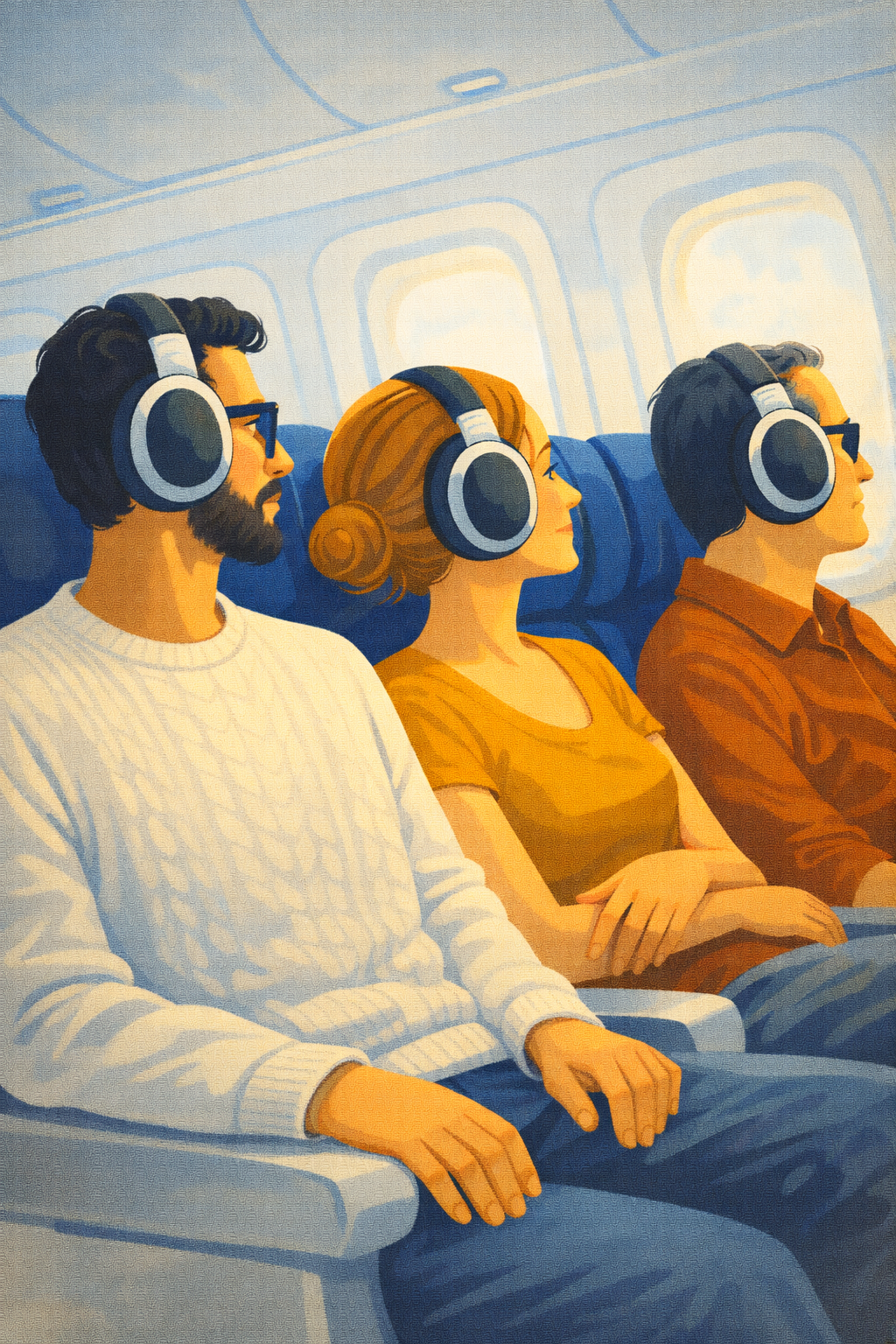
Most will pop in noise-cancelling headphones as a clear signal that they have zero interest in interaction.
None of them have been rude or aggressive.
They’re just not baby people – and that’s okay. Respect.
4. How to help baby's ears during flight
The most uncomfortable moments tend to be take-off and landing, when the cabin pressure changes. Babies can’t pop their own ears, but drinking milk usually helps. Breast and/or bottle, it doesn’t matter – both are equally great options and are completely a personal choice.
I used a combination of bottle-feeding and breastfeeding from when Lark was about two months old. She struggled with latching, and I felt awkward feeding in public (I know, I know) – an energy she picked up on and responded to by refusing to feed.
Bottles worked for us.
I’d always travel with at least two bottles of formula ready to go – one for take-off and one for landing.
She’d smash both bottles with such enthusiasm it looked like I never fed the chubby little thing.
I once made the mistake of optimistically believing I could mix them on the plane. Spoiler: when you’re travelling solo with a baby who’s wriggling like a wild animal attempting escape, the last thing you want to be doing is levelling “perfect” scoops of formula into an open bottle of water. From that messy day forward, I mixed the bottles before boarding.
As she got older, I added a third bottle with just water, plus spare formula powder because delays happen – and your sanity will thank you for being Girl Guide ready.
5. How to entertain a baby on a flight
Toys
Window spinners were a big hit for us. Some airline staff don’t love them on the windows during take-off and landing, but they’re great entertainment once those seatbelt signs are switched off.
Anything small, quiet, and that fits in a nappy bag is a win.
If they do play music, look out for the ones where the volume can be adjusted to below inside voice levels.
Lark’s great aunt once gave her a Toot Toot Driver tractor. While the song is permanently etched into my head like a '90s Tasmanian Christian television commercial, the lower volume setting means others are saved from the earworm audio loop.
Screens
I used to worry I’d be judged for giving my baby a screen.
Then I got parent tired – and suddenly I had far less energy to worry about what others think.
I downloaded around ten paid episodes of Lark's favourite show, Bluey, to my phone from AppleTV (not an advertisement) and they’re available in flight mode.
Lark is happy to watch the visuals without sound. Gold.
Also, most parents use screens. We just pretend we don’t.
Singing
Right from the time Lark was born, I sang to her. Mostly to calm her when distressed.
The go-to song? “Part of Your World” from The Little Mermaid because it comforts her.
Slight tangent: I remember when she was three months old and had Covid, we rushed her to emergency.
She was hooked up to monitors while doctors cleared her sinuses – a horrible procedure for everyone involved.
Her heart rate spiked, and so did mine.
When it was safe, I picked her up and sang to her.
I watched her heart rate slow from racing distressed to content on the monitor.
At that moment, I was humbled by the power of song and had a data point (big fan of evidence) to show that singing comforted her.
On flights – especially during landing, if she’s not hungry enough for another bottle – I lean in close and sing softly.
Nursery rhymes.
Favourite songs.
Even the Bluey theme on repeat.
It works a treat.
Pretty sure it’s not audible, but if it is, quiet amateur singing is a dream on the ear compared to a full-blown baby meltdown.
Sleeping
This isn't always possible due to flight times or prices, but if you can time flights around naps, do it.
Lark’s very first flight? We popped a bottle in her mouth, and she slept the entire way. Absolute dream.
I thought it would be the same if we timed her flight around her evening bedtime, but she’s a gremlin before bed, and that was hard. Never again.
6. Mid-air nappy changes
The smelly antisocial ones. The do-it-now before the entire cabin's nostril gag.
Grab a change mat, wipes, a nappy and head straight to the toilet with the baby change table.
I always found them too small for a whole nappy bag, so a quick-grab kit helps.
7. Bonus tray table seat hack
In Australia, babies under 2 years can sit on your lap and fly for free. Once your baby can sit up and support their neck, lowering the tray table and sitting them on it, facing you, is a great way to mix up the flight while keeping them from kicking the passenger next to you.
8. Board first, leave last
Most airlines are wonderfully supportive of families. When they call for passengers who need extra assistance – that’s you.
Boarding early gives you time to settle without the pressure of a growing line behind you.
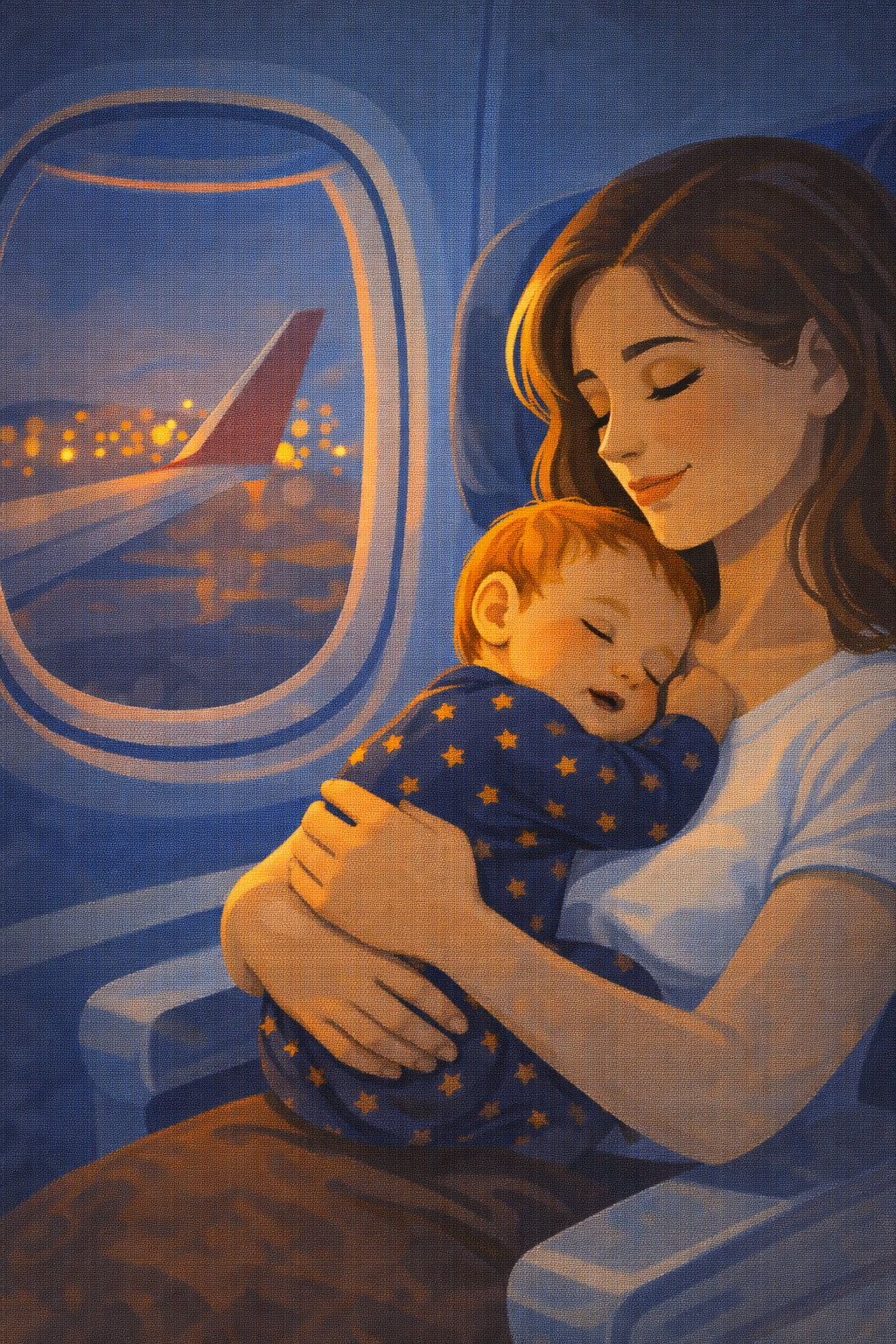
On landing, wait it out and leave last. A flight attendant once told me it's common for babies to fall asleep during landing, so leaving last will give you a quiet moment to breathe too. A tiny treat for you.
Collect your things slowly, and accept help from the crew; they now have more time to help you.
There’s more to say about packing and airport logistics, but this has helped me while in the air. Travel doesn’t have to stop just because you’re a parent.
And if you need to hear it one more time: You’re doing better than you think. You've got this.
Do you have any tips for travelling for babies or toddlers? I'm always looking for more to help with our travels too.
Fireside Q&A
Will my baby’s ears hurt on a plane?
Babies can feel pressure changes during take-off and landing because they can’t pop their ears. Feeding – bottle or breast – helps, as the sucking motion relieves pressure. If your baby isn’t hungry, holding them close and singing softly can also be comforting.
Is it okay if my baby cries on a flight?
Yes. Babies cry because it’s how they communicate. Most passengers understand this, and many are more concerned about how you’re coping than the noise itself. You’re not doing anything wrong.
What’s the best way to calm a baby on a plane?
Feeding, cuddling, gentle singing, and familiar comforts work best. For older babies, quiet toys or visual entertainment (like a show played on silent) can help keep them settled.
Should families board planes early or last?
Boarding early can give you time to settle without pressure. On arrival, leaving last often helps – babies frequently fall asleep during descent, and cabin crew usually have more time to assist once the rush has passed.
What should I pack for nappy changes on a plane?
Plane bathrooms are small. Instead of bringing your full nappy bag, grab just the essentials: a nappy, wipes, and a change mat. It makes the process much easier.
